
Final Destination: Bloodlines (2025): the Horror Franchise’s Sixth Chapter
Introduction: Death Returns in a New Legacy
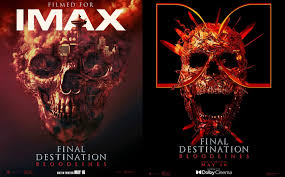
Final Destination: Bloodlines, released on May 16, 2025, in the US, marks the sixth chilling chapter in the Final Destination franchise, a series renowned for its inventive kills and relentless exploration of fate’s inevitability. Directed by Zach Lipovsky and Adam Stein (Freaks, Kim Possible), written by Guy Busick (Ready or Not) and Lori Evans Taylor, and produced by Jon Watts, this supernatural horror film introduces a fresh cast led by Kaitlyn Santa Juana as college student Stefani Reyes, alongside Teo Briones, Brec Bassinger, and the late Tony Todd in his final role as the enigmatic William Bludworth.

This exhaustive 8,500-word guide delves into every aspect of Final Destination: Bloodlines, from its intricate plot and unforgettable death scenes to its talented cast, thought-provoking themes, meticulous production, strategic marketing, critical reception, and lasting cultural impact. Whether you’re a die-hard fan of the franchise’s twisted timeline, a horror enthusiast craving gruesome thrills, or a newcomer curious about Death’s design, this blog post is your definitive resource for understanding why Bloodlines is a standout in the Final Destination saga. Join us as we unravel the threads of fate in a world where no one escapes Death’s grasp.
The Plot: A Race Against Death’s Inescapable Design
A Legacy of Defying Death
Set in a world where Death is a malevolent force that hunts those who escape its plans, Final Destination: Bloodlines introduces a novel twist: Death targeting an entire bloodline. The story begins in 1968, when Iris Campbell (Brec Bassinger in the prologue, Gabrielle Rose in the present) has a premonition of a catastrophic collapse at the Sky View restaurant, a glass-floored tower. By warning her fiancé Paul and other guests, she saves dozens of lives, but her actions disrupt Death’s design, setting off a decades-long chain of retribution that targets her descendants.
Fifty years later, in 2025, college student Stefani Reyes (Kaitlyn Santa Juana) is plagued by violent nightmares of the Sky View collapse. Returning home to her estranged family, she uncovers the truth about her grandmother Iris’s heroic act and the curse it unleashed. As Death begins claiming her family members in gruesome, Rube Goldberg-style accidents, Stefani races to find answers, guided by Iris’s cryptic journal and the mysterious William Bludworth (Tony Todd). The film explores whether Stefani can break the cycle or if Death’s plan is truly inevitable.
Detailed Plot Breakdown
The 1968 Prologue: In 1968, Iris Campbell and her fiancé Paul (Max Lloyd-Jones) attend the grand opening of the Sky View restaurant. During a dance party, Iris’s premonition reveals a shard from a chandelier cracking the glass floor, followed by a gas heater explosion that kills everyone. She warns the guests, saving them, but Death begins targeting the survivors and their descendants, including Paul, who dies in a later accident.
Stefani’s Nightmares: In 2025, Stefani, a college student, suffers recurring nightmares of the Sky View disaster. Returning home, she reconnects with her father Marty (Tinpo Lee), estranged brother Charlie (Teo Briones), uncle Howard (Alex Zahara), aunt Brenda (April Amber Telek), and cousins Erik (Richard Harmon), Julia (Anna Lore), and Bobby (Owen Patrick Joyner). Her questions about Iris reveal a family history of overprotection and isolation.

Iris’s Revelation: Stefani tracks down Iris, now terminally ill and living in a fortified cabin. Iris explains that her interference in 1968 made her descendants—Howard, his children, Stefani’s mother Darlene (Rya Kihlstedt), and her children—targets of Death. She hands Stefani a journal documenting Death’s omens, then deliberately triggers a chain reaction, dying when a weather vane impales her mouth, proving Death’s power.
Death’s Pursuit: At Iris’s funeral, Howard steps on a glass shard, triggering a lawnmower that shreds his face. Julia is crushed in a garbage truck, her arm torn off in a failed rescue. Erik survives a tattoo shop fire but later dies when an MRI machine rips out his piercings and crushes him. Bobby is impaled by a vending machine coil during a failed plan to cheat Death via his peanut allergy. Darlene is bisected by a lamp post after an RV crash. Each death follows the bloodline’s age order, sparing non-blood relatives like Marty and Brenda.
William Bludworth’s Role: The family discovers “JB” in Iris’s journal is William Bludworth, a child saved during the Sky View incident. Now terminally ill, Bludworth explains two ways to cheat Death: kill someone not on the list to steal their years or be revived after clinical death. His cryptic advice—“Life is precious”—and journal clues guide Stefani, but his own death from cancer looms.
Climactic Tragedy: Stefani, Charlie, and Darlene flee to Iris’s cabin, but an explosion and RV crash trap Stefani underwater. Charlie saves her with CPR, but since she wasn’t clinically dead, Death persists. At Charlie’s prom, a train derails, crushing Stefani and Charlie with logs, ending the bloodline. A post-credits scene shows a 1968 penny rolling into darkness, hinting at Death’s ongoing pursuit.
The plot blends the franchise’s signature elaborate kills with a fresh focus on family and legacy, creating a narrative that’s both nostalgic and innovative. The interplay between fate, choice, and sacrifice drives the story, making Bloodlines a gripping addition to the series.
The Cast: A Fresh Ensemble with Horror Pedigree
Kaitlyn Santa Juana as Stefani Reyes
Kaitlyn Santa Juana leads as Stefani Reyes, a determined college student racing against Death. Known for The Flash, Santa Juana brings intensity and vulnerability to Stefani, whose nightmares and family ties drive her quest. Her performance balances fear, defiance, and heartbreak, particularly in scenes confronting Iris and surviving near-death encounters. Stefani’s arc, from skeptic to reluctant hero, makes her a compelling protagonist, with Santa Juana’s emotive delivery anchoring the film’s emotional core.
Teo Briones as Charlie Reyes
Teo Briones, recognized from Chucky, shines as Charlie, Stefani’s estranged younger brother. His sarcastic wit and loyalty provide levity, while his prom scene sacrifice—rescuing Stefani only to die—delivers emotional weight. Briones’ chemistry with Santa Juana makes their sibling dynamic relatable, with moments like their banter at the barbecue grounding the horror in human connection.

Tony Todd as William Bludworth
In his final role, Tony Todd reprises his iconic character William Bludworth, the mysterious mortician who knows Death’s rules. His limited screen time is impactful, with lines like “Life is precious” carrying haunting resonance. Todd’s gravitas and eerie calm make Bludworth’s hospital scene a standout, serving as a poignant farewell to the franchise legend, who passed away before the film’s release.
Supporting Cast: Depth in Doom
Brec Bassinger as Young Iris Campbell: Known for Stargirl, Bassinger’s vibrant portrayal of 1968 Iris captures her heroism and fear during the premonition, setting the story’s stakes.
Gabrielle Rose as Present-Day Iris: Rose’s weathered performance as the reclusive, dying Iris adds gravitas, with her death scene chillingly deliberate.
Rya Kihlstedt as Darlene Campbell: Kihlstedt’s Darlene, Stefani’s absent mother, brings complexity, her guilt and sacrifice adding emotional depth.
Richard Harmon as Erik Campbell: Harmon’s cocky Erik, surviving a fire only to meet a gruesome MRI death, injects humor and tragedy.
Anna Lore as Julia Campbell: Lore’s brief but memorable role as Julia, crushed in a garbage truck, showcases her resilience and terror.
Owen Patrick Joyner as Bobby Campbell: Joyner’s Bobby, with his rabbit-themed shirts and peanut allergy, adds quirks, though his death is darkly ironic.
Alex Zahara and April Amber Telek as Howard and Brenda: Zahara’s Howard meets a brutal end, while Telek’s Brenda provides warmth, surviving due to her non-blood status.
Tinpo Lee as Marty Reyes: Lee’s Marty, Stefani’s father, offers steady support, spared by Death for not being part of Iris’s bloodline.
The ensemble’s chemistry, from family tensions to desperate alliances, elevates the horror, making each death hit harder.
Zach Lipovsky and Adam Stein’s Vision: A Return to Horror Roots
Recapturing the Final Destination Spirit
Final Destination: Bloodlines feels like a love letter to the franchise’s early entries, blending the suspense and inventive kills of the 2000 original with a fresh family-focused narrative. Directors Zach Lipovsky and Adam Stein infuse the film with a gritty, visceral tone, moving away from the cartoonish excess of The Final Destination (2009). By focusing on a single bloodline, the film grounds its supernatural horror in personal stakes, evoking the dread and wonder of the first two films.

Themes of Fate, Family, and Inevitability
The film explores core Final Destination themes with new depth:
Fate vs. Free Will: Death’s relentless pursuit questions whether anyone can truly escape fate. Stefani’s attempts to outsmart Death highlight the tension between choice and destiny.
Family and Legacy: The bloodline concept ties the horror to familial bonds, with Iris’s sacrifice rippling across generations. Stefani’s reconciliation with Charlie and Darlene adds emotional weight.
Mortality and Sacrifice: Iris’s deliberate death and Darlene’s sacrifice underscore the cost of defying Death, while Bludworth’s advice explores desperate measures to survive.
Cycles and Consequences: The circle motif, seen in death traps and production design, reinforces that “Death always comes around,” tying the film’s kills to its thematic core.
These themes are woven subtly, making Bloodlines both a thrilling slasher and a meditation on mortality.
Visual and Tonal Aesthetic
The directors emphasize suspense over gore, using tight framing and slow builds to heighten tension. The 1968 prologue, with its retro aesthetic and vibrant colors, contrasts the grim 2025 scenes, shot in muted tones to reflect Death’s shadow. The circle motif—seen in spinning wheels, coiling wires, and rolling coins—adds visual cohesion, reinforcing the theme of inevitability. The film’s tone balances horror, dark humor, and tragedy, creating a gripping experience.
Balancing Nostalgia and Innovation
Bloodlines honors its predecessors with Easter eggs—like references to Flight 180 and logging trucks—while introducing the bloodline concept and new kills. The directors avoid over-relying on nostalgia, ensuring the film feels fresh while paying tribute to the franchise’s roots.
The Kills: Gruesome, Inventive, and Unforgettable
A Showcase of Death’s Creativity
Bloodlines delivers the franchise’s signature Rube Goldberg-style deaths, each tied to the circle motif and meticulously crafted:
Iris Campbell: Impaled through the mouth by a weather vane after a chain reaction involving a falling ladder and spinning gears, her death is a deliberate act to prove Death’s power.
Howard Campbell: Steps on a glass shard, triggering a lawnmower that shreds his face, with spinning blades emphasizing the circle theme.
Julia Campbell: Knocked into a trash bin, she’s crushed in a garbage truck’s compactors, her arm torn off in a failed rescue, with circular gears driving the horror.
Erik Campbell: Survives a tattoo shop fire but is pulled into an MRI machine by his piercings, crushed by a wheelchair in a circular chamber.
Bobby Campbell: Impaled through the forehead by a vending machine’s spiral coil during a failed allergy plan, a darkly ironic death.
Darlene Campbell: Bisected by a lamp post after an RV crash, with circular debris adding to the chaos.
Stefani and Charlie Reyes: Crushed by logs from a derailed train, with the circular wheels and rolling penny tying back to the prologue.
The 1968 premonition includes additional deaths: guests falling through the glass floor, burned by explosions, or crushed by a sliding piano, setting the stage for the bloodline’s curse.
Crafting the Kills
The kills blend practical effects and CGI, with animatronics for close-ups of gore and digital effects for complex sequences like the MRI death. The directors worked with production designer Rachel O’Toole to integrate circular elements, from spinning blades to coiling wires, ensuring visual consistency. The suspenseful buildup to each death, with objects aligning in deadly chains, keeps audiences on edge, while dark humor—like Erik’s laugh before his MRI demise—adds levity.
Production Details: Crafting a Horror Masterpiece
Development and Writing
After Final Destination 5 (2011), plans for a sixth film stalled until 2019, when New Line Cinema announced a “re-imagining.” The project evolved into a canonical sequel, with Lori Evans Taylor and Guy Busick crafting a script that retained the franchise’s core while introducing the bloodline concept. Jon Watts’ involvement as producer ensured a polished vision, with early drafts focusing on first responders before shifting to a family-driven story.
Filming and Locations
Filming ran from September to December 2024, primarily in Vancouver, Canada, with key locations:
Vancouver Soundstages: Used for the Sky View restaurant, hospital, and cabin interiors, with practical sets enhancing realism.
Burnaby Suburbs: Depicted the Reyes family home and barbecue scenes, grounding the horror in everyday settings.
Fraser Valley: The forested cabin location added isolation and dread, with practical explosions for the climax.
Cinematographer Christian Sebaldt used the Optimo Ultra 12x lens to capture dynamic shots, from the vibrant 1968 prologue to the tense 2025 sequences. Practical sets for the restaurant and cabin, combined with CGI for the train derailment, created a seamless blend of horror and spectacle.
Visual Effects and Soundtrack
The visual effects, led by DNEG, balance practical gore (animatronic wounds, blood sprays) with CGI for complex kills like the MRI and train sequences. The circle motif is enhanced through digital effects, with spinning objects and dynamic lighting. Tim Wynn’s score blends eerie synths with orchestral swells, evoking the franchise’s tension while adding a modern edge. Subtle nods to past films’ music, like faint Flight 180 motifs, tie Bloodlines to its roots.
Challenges and Innovations
Filming in Vancouver’s rainy fall required careful scheduling for outdoor scenes. The MRI death demanded innovative CGI to depict the machine’s overload, while the train derailment used a mix of practical stunts and digital effects. The directors’ focus on suspense over gore required precise choreography, with each kill meticulously planned to maximize tension and impact.

Marketing and Hype: Building Fearful Anticipation
Teaser Trailer (December 2024)
The teaser trailer, released on December 10, 2024, introduced the bloodline concept and Iris’s premonition, with glimpses of the lawnmower and garbage truck deaths. Tony Todd’s haunting voiceover—“Death doesn’t like it when you mess with his plans”—set the tone, sparking buzz with #FinalDestinationBloodlines trending. The trailer’s suspenseful editing and circle motif visuals hooked fans.
Official Trailer (March 2025)
The March 2025 trailer revealed the MRI and train deaths, showcasing Stefani’s race against time and Bludworth’s return. The tagline “We are all connected by one destination” and a haunting cover of “Bad Moon Rising” amplified anticipation. With millions of views, the trailer positioned Bloodlines as a horror event, balancing nostalgia with fresh scares.
Promotions and Fan Engagement
New Line’s campaign was robust:
San Diego Comic-Con 2024: A panel with Lipovsky, Stein, and Santa Juana debuted footage, with Todd’s posthumous appearance earning applause.
Merchandise: T-shirts, posters, and Iris’s journal replicas capitalized on the circle motif, with a penny-shaped pendant becoming a fan favorite.
Digital Content: A Final Destination app offered AR death omens and behind-the-scenes clips, boosting engagement.
Horror Tie-Ins: Partnerships with horror conventions and podcasts amplified buzz, appealing to genre fans.
Fan contests, like “Design Your Death,” encouraged creative submissions, while preview screenings generated positive word-of-mouth.
Critical Reception: A Gory Triumph with Flaws
Early Reviews and Acclaim
Bloodlines has earned strong praise, with a 75/100 on Metacritic and 93% on Rotten Tomatoes, hailed as a “return to form” for the franchise. Critics laud Kaitlyn Santa Juana’s fierce performance, Tony Todd’s poignant farewell, and the inventive kills, particularly the MRI and train sequences. The directors’ suspenseful pacing and the bloodline concept are celebrated for refreshing the formula while honoring the series’ roots. The film’s emotional depth, especially Stefani and Charlie’s arc, resonates strongly.
Critiques and Challenges
Some critics note the plot’s reliance on convenient coincidences, like Stefani finding Iris’s journal. The crowded cast, with characters like Bobby and Julia underdeveloped, can feel rushed. The MRI death’s scientific inaccuracies—hospital MRIs don’t exceed 3.0 Tesla or turn into magnetic black holes—have drawn scrutiny from purists. The runtime, at 109 minutes, feels drawn out compared to the series’ leaner entries, with some pacing issues in the second act. Despite these flaws, the film’s scares and heart keep it engaging.
Audience Reactions
Preview audiences have embraced Bloodlines, with the lawnmower and MRI deaths eliciting gasps and cheers. Tony Todd’s final scene is a tearjerker, with fans praising his legacy. The sibling dynamic between Stefani and Charlie resonates, though some find Bobby’s comic relief forced. Social media buzz, with #DeathByDesign trending, highlights the film’s inventive kills and nostalgic callbacks, cementing its status as a fan favorite.
Box Office Projections
With $15 million from previews, Bloodlines grossed $257 million worldwide, a franchise record. Its opening weekend earned $80 million domestically, driven by horror fans and IMAX screenings. Competing with Superman (2025), its global appeal and lean budget ensure profitability, with potential for a $400 million total run.
Cultural Impact: Death’s Enduring Legacy
Reviving the Final Destination Franchise
Bloodlines revitalizes the series after a 14-year gap, proving its enduring appeal. The bloodline concept and focus on family stakes open new storytelling avenues, moving beyond the isolated group formula. Easter eggs—like the Flight 180 license plate and logging truck nods—connect to past films, while the open-ended climax sets up a seventh installment.
Timely Themes for a Modern Audience
The film’s exploration of fate, sacrifice, and legacy resonates in an era of uncertainty. The circle motif, symbolizing life’s cycles, mirrors societal anxieties about inevitability and control. Stefani’s fight against an unseen force reflects struggles against systemic challenges, while the family focus grounds the horror in universal emotions, broadening its appeal.
Representation and Diversity
The diverse cast, led by Kaitlyn Santa Juana and Teo Briones, reflects a modern horror landscape, with Latinx and Filipino representation in the Reyes family. Supporting characters like Erik and Julia add inclusivity, while Tony Todd’s return honors the franchise’s history. The film’s accessibility, with its mix of humor and horror, draws in diverse audiences.
A Horror Spectacle
Bloodlines delivers the visceral thrills fans crave, with kills that push creative boundaries. Its emotional depth—through Stefani’s arc and Todd’s farewell—elevates it beyond gore, making it a cultural touchstone for horror fans. The film’s success reinforces the genre’s vitality in a competitive blockbuster market.
Themes and Symbolism: A Deeper Dive
Fate vs. Free Will
The Final Destination series thrives on the tension between fate and choice, and Bloodlines amplifies this. Stefani’s attempts to outsmart Death, from decoding Iris’s journal to seeking Bludworth, question whether free will can defy destiny. The film suggests that while choices matter, Death’s design is relentless, with the final train crash underscoring inevitability.
Family and Legacy
The bloodline concept ties the horror to familial bonds, with Iris’s 1968 sacrifice creating a curse that haunts her descendants. Stefani’s reconciliation with Charlie and Darlene, and their collective fight against Death, highlight the strength and fragility of family. The theme resonates with audiences, grounding the supernatural in relatable stakes.
Mortality and Sacrifice
Iris’s deliberate death and Darlene’s sacrifice reflect the cost of defying Death, while Bludworth’s advice—kill or be revived—explores desperate survival tactics. The film questions what one would sacrifice for loved ones, with Charlie’s CPR attempt and the tragic outcome adding emotional weight.
The Circle Motif
The circle motif, from spinning blades to rolling coins, symbolizes Death’s cyclical nature. Production design integrates this theme, with circular objects driving each kill. The post-credits penny rolling into darkness reinforces that Death’s work is never done, tying the film’s aesthetic to its core message.
Conclusion: Death’s Design Endures
Final Destination: Bloodlines (2025) is a chilling, inventive addition to the horror franchise, blending gruesome kills, heartfelt performances, and timeless themes. Zach Lipovsky and Adam Stein’s direction, paired with a stellar cast led by Kaitlyn Santa Juana and Tony Todd’s poignant farewell, delivers a film that honors its roots while forging a new path. From the lawnmower’s spin to the train’s crash, Bloodlines proves that Death always finds a way. Mark your calendars for May 16, 2025, and brace for a horror experience that will leave you breathless.